The deputy raised my mother’s yellow temporary license toward the sunlight, his thumb next to a dark little mark near her address.
“Did anyone at the license office explain what this meant?” he asked.
“No,” Shirley said. “They handed me the paper and told me my new card would arrive in the mail.”
I had the pan of lemon bars braced against my hip. When I leaned in to get a look at the mark, the lid shifted, and I caught the edge before it could slip off.
“Is something wrong?” I asked.
“I can’t quite read the notation.” The deputy lowered the paper. “I’d like to verify it before I send you on.”
Shirley glanced toward the Buick. “That’s all right. Is there somewhere I should wait?”
“Right here for the moment, ma’am. I’ll need a few details first.”
His name tag read Allen. He looked about as old as the younger salesmen at my office, though he spoke with such deliberate care that it made me want to answer in my mother’s place.
Instead I checked my watch. It was 1:11, and the church ice cream social started at 2:30. Shirley had promised to have the lemon bars there before the serving table got busy.
“We’ve got a church social,” I said. “Could you check it quickly?”
“Quickly,” Allen repeated. He tapped his pen on his notebook before writing. “I’ll do what I can.”
Shirley reached out for the pan, but I kept hold of it. Powdered sugar clung to the rim beneath the clear lid, and the pan was still warm from her kitchen.
“I can carry this,” I said.
“I know you can. You’re tilting it.”
I straightened the pan. Allen asked Shirley for her date of birth and wrote it down. He compared the address to what she told him, but his pen paused beside the mark on the yellow paper.
“Did you renew in person?” he asked.
“Yes. At the licensing office in Benton, last Tuesday.”
“Last Tuesday.” He wrote that down too. “And this is the paper they gave you there?”
“It is. You’re welcome to look at it as long as you need.”
I shifted the pan to my other hand. “The road is right there,” I said. “Could we wait by the car?”
Allen looked toward the traffic moving along County Road 6. “Yes. Please stay on the shoulder. I’ll come over once I’ve made the inquiry.”
Shirley went around to the passenger side, and I followed. The Buick’s open door gave us a thin strip of shade, though the cloth seat still held the heat of the afternoon.
“I should have put the pan in the trunk,” I said.
“And let it slide from one side to the other?” She reached over and pressed one corner of the lid down. “Keep it level, Jeffrey.”
“Could I at least carry it out of the sun?”
“You can carry it over here. I’ll carry it into church myself.”
“You’ve already carried it from your kitchen to the car.”
“And I expect I can make it from the parking lot to the table.” She patted the lid again. “Thank you for offering.”
I moved nearer the open door, holding the pan where most of it was shaded. Shirley leaned against the Buick and looked back at Allen, who stood beside his patrol vehicle with her license in one hand.
“He didn’t say how long,” I said.
“No. He didn’t have the answer yet.”
“The women setting up are going to wonder where your bars are.”
“They’ll have ice cream. Nobody needs to wait for my bars before they begin.”
She had paid three dollars for each of our tickets that morning and tucked them into her handbag. I had told her she could hold off on buying mine until I knew whether I could get away from work. She bought it anyway.
“I could call the church,” I said.
“There’s no need yet. We still have more than an hour.”
She rested her hand on the top edge of the door. “Did you remember the serving knife?”
I looked down at the lid. Under it was a knife wrapped in a paper napkin, exactly where she had put it.
“You put it in there.”
“I did. I wanted to hear you say you noticed it.”
Before I could answer, Allen came over. He had the yellow paper and his notebook together in one hand.
“Mrs. Hagen, may I see your registration?” he asked.
“Yes. Give me just a minute, please.”
I set the pan on the passenger seat while she opened her handbag. The lid rattled against the metal rim, and I steadied it before it could shift again.
“I’ll get it from the glove box,” I said.
“No, it’s in here.”
She took out her wallet, the church tickets, and a folded receipt. Four dollars was written across the top beside the word milk. She slid it back and reached into a narrow pocket in the lining.
Allen waited by the front fender. He tapped his pen against the notebook, then stopped.
“Do you keep another copy somewhere else?” I asked.
“I keep the registration in my bag.” She used her thumb to separate two envelopes. “The insurance card is with it.”
“You don’t need to find the insurance card for me,” Allen said. “I only need the registration.”
“Registration,” Shirley said. “I’ve nearly got it.”
I watched her pull out a small bundle held with a rubber band. She removed the band, sorted through the papers, and handed Allen a folded sheet.
“Here you are. The registration.”
“Thank you, ma’am.”
I had been reaching toward the glove box latch when she found it. There were more papers in her bundle, their corners softened from use, and she tucked them away again before I could see what they were.
Allen unfolded the registration beside the yellow license. “Same address,” he said, and copied a line into his notebook.
“Has she done something wrong?” I asked.
“I didn’t say that. I need to check the notation and verify the license.”
Shirley looped the rubber band back around the remaining papers. “I renewed because my old card was about to expire,” she said. “I didn’t want to wait until the last day.”
“Last day,” Allen repeated. “No, ma’am, that makes sense.”
He handed the registration back. She slid it into a separate pocket inside her handbag and closed the clasp.
“Can I keep this with me?” she asked, touching the yellow paper.
“I need it for the check, if that’s all right.”
“All right. Thank you for asking.”
The pan sat on the passenger seat with one corner of the lid lifting again. I pressed it down and picked up the pan before Shirley could reach for it. She moved toward the open doorway, and I stepped out of the way.
“I can put it back on the floor,” I said.
“Not yet. There may be grit from my shoes.”
I held it while she sat on the edge of the seat. She smoothed her dress over one knee and then drew her feet back onto the gravel. The clock on the Buick’s dashboard read 1:20.
“We’re still early,” she said.
“For now.”
“You sound like you did when you missed the turn for the high school.”
“I didn’t miss it.”
“Then you took the long way.”
I gave her a look, and she smiled. We had driven that road for years when I played football. Most Fridays she had been at work, and I had either gone home with somebody else’s parents or waited for her to pick me up afterward.
“The home game against Mill Creek,” I said. “You were working that night too.”
She looked up at me. “Yes, I was.”
“We won by two points. I kept looking toward the gate because you said you might make it.”
“I remember that game.”
“You weren’t there.”
“No. I wasn’t.” She touched the edge of the pan, steadying it against my arm. “I remember more of those Fridays than you think.”
I waited for her to explain. A car went by on the road, and Shirley turned her face away from the dust it threw up.
“What do you remember?” I asked.
She opened her handbag and took out the two church tickets. She checked that they were still together, then slipped them back into the pocket.
“More than whether you won,” she said.
I had spent years telling myself those games had not mattered much to her. When I asked what else she knew, she looked past me toward Allen.
He had opened his notebook again. “Mrs. Hagen, I’m going to check with dispatch now.”
“All right,” she said. “We’ll be here.”
I set the pan back on the seat and rested one hand over the lid. Shirley stood up and came to my side, close enough that our sleeves touched.
“Would it be possible to let us know when you hear back?” I called.
“Yes, sir. I’ll come right over.”
Allen carried the yellow paper back toward his patrol vehicle.
Shirley touched the corner of her eye and asked whether I had a tissue. I had a clean handkerchief at home, which did not help her there on County Road 6.
“There may be one in the glove box,” she said. “If it hasn’t turned to dust.”
I opened the passenger door and pulled the latch. The box dropped against my knee, revealing a stack of napkins, a tire gauge, and an envelope with one corner folded under.
“Do you want a napkin?” I asked.
“That will do. Take one from the middle.”
The first two had a gray line across them where the latch had caught. I pulled out a clean one and handed it to her. Beneath them was a thin yellowed sheet, folded twice.
I opened it just far enough to see the name of my high school and a column of dates. The ink had faded, but the word FOOTBALL was still plain across the top.
“Where did you get this?” I asked.
Shirley took the napkin and touched it to her eye. “From your school. They handed them out at the beginning of the season.”
I turned the paper over. On the back, in her handwriting, were milk, eggs, and coffee. Farther down she had written butter and then crossed it out.
“You used it as a grocery list.”
“Yes. I didn’t have another piece of paper handy.”
I held it by the fold. One corner had gone soft from rubbing against the other papers in the glove box. On the front, one of the Friday dates had a faint circle around it.
“Did you know it was still in here?” I asked.
“I did. Please don’t throw it away.”
“I was only looking at it.”
“I know. You have a habit of cleaning out a car once you get started.”
I set the schedule on the passenger seat. She had kept it even after the groceries were long bought, and I could not tell why.
Allen came back holding the registration in one hand and the temporary license in the other. He stood where Shirley could see both papers.
“The addresses match,” he said. “I compared the street and the number.”
“That is my address,” Shirley said. “Thank you for checking it.”
He pressed the registration against his notebook. “The mark beside it on the temporary license still hasn’t been clarified through the records system.”
“Hasn’t been clarified?” I asked.
He tapped his pen against the notebook before writing. “The inquiry went through. I haven’t received an answer about that mark.”
Shirley held out her hand for the registration. Allen gave it back to her, and she returned it to her handbag, fitting it behind a small zippered pocket.
“Do you need that again?” she asked him.
“I may. Could you keep it handy for now?”
“Yes. I know where it is.”
She closed the clasp but left the bag on her arm. I looked toward the patrol vehicle, where the screen could be seen through the open window.
“Is there someone you can call?” I asked.
“I sent the inquiry through our system,” Allen said. “I’ll follow up if I need to.”
“Would it be possible to see what it says?”
“See what it says.” He glanced back at his vehicle. “Yes, come over to the window.”
I started after him, then turned to look at Shirley. The pan was still where I had left it, and the lid had slipped a fraction to one side.
“I’ll stay right here,” she said. “Go ahead.”
At the patrol vehicle, Allen moved his notebook off the passenger side so I could lean close enough to read the screen. The letters were small, and he pointed to a line near the bottom.
“That’s the request I sent,” he said.
The line showed her name and a status. Pending.
“Does a basic renewal normally take this long?” I asked.
“Sometimes a response comes back quickly. Sometimes it takes longer.”
“How much longer?”
“I can’t give you a time.”
He tapped the screen with his pen, then pulled his hand away without touching it again. There was no response under the request, only the blank space where one might appear.
“Could the mark be what’s holding it up?” I asked.
“It could be part of what they’re checking. I don’t want to guess before they answer.”
I read the line again. The word was still there, small and unchanged.
“Does this mean her license is fine?” I asked.
“It means the inquiry is pending. I still need the response.”
He angled the screen slightly back toward himself and checked the date in his notebook. Shirley was watching us from the Buick, her handbag tucked close to her side.
“We need to get to church,” I said. “The social starts at two thirty.”
“Two thirty.” Allen wrote the time beneath his notes. “I understand you have somewhere to be. I’ll let you know as soon as I have an answer.”
“Could you ask them to hurry?”
“I can check on the inquiry. I can’t promise that will make the response come any sooner.”
He laid the pen across his notebook. I had expected to find some error message or an empty field he could fill in. There was neither.
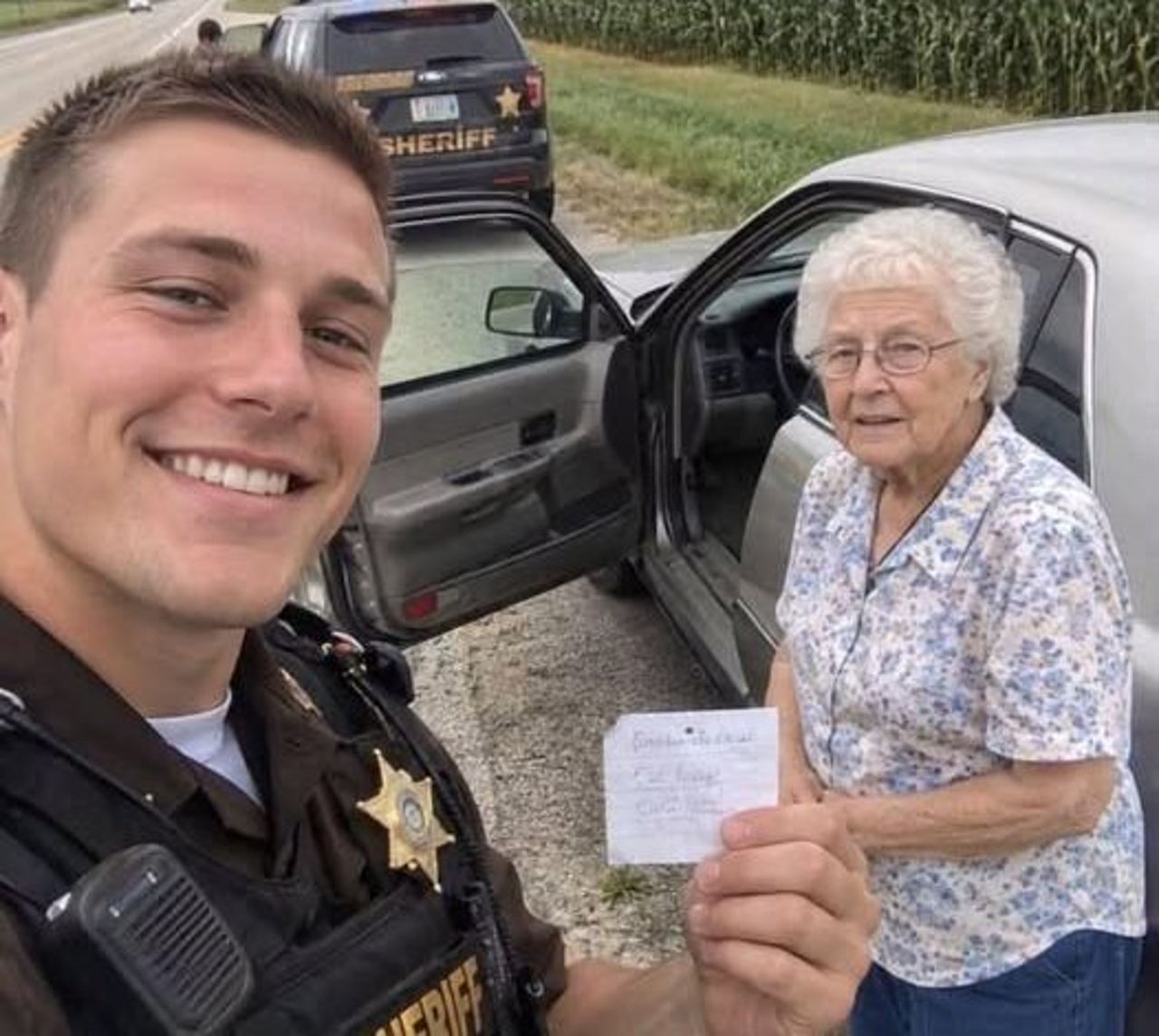
When I got back to the Buick, Shirley had picked up the schedule. She held it open in both hands, careful not to let the thin fold split.
“Did you learn anything?” she asked.
“The request is in. It says pending.”
“And the mark?”
“He’s still waiting on that too.”
She folded the schedule back along its old lines and handed it to me. “Put it somewhere safe, please. It’s lasted this long.”
I laid it across the seat again, away from the open door. She looked down at the pan, then at the band of sunlight stretching over its lid.
“Those bars are warming up,” she said.
“I could move them inside the car.”
“Yes, if you can find a flat place. I don’t want lemon filling on the upholstery.”
The cloth seat still held the afternoon heat when I pressed my palm to it. I crouched and looked into the passenger footwell. The floor mat was level, and the space was out of the direct sun.
“Here?” I asked.
Shirley bent to look. “The footwell will be fine. Make sure the pan isn’t sitting on that buckle.”
I moved the loose seat belt buckle aside and lifted the pan with both hands. The metal rim was warm, and powdered sugar clung there where the lid did not fully cover it.
“Watch that corner,” she said.
“I’ve got it.”
“You said that when you carried my birthday cake.”
“The cake made it to the table.”
“Most of it did. Your uncle got a very large slice from the lid.”
I lowered the pan onto the mat. Shirley checked it from the doorway while I pressed lightly on each side.
“It’s flat,” she said. “Thank you.”
The lid rattled once as I settled it. I left it shut and withdrew my hands so I would not tip the pan trying to improve it.
“I’ll carry it in when we get there,” I said.
“No, I’ll carry it. You can open the door for me.”
“That seems like a fair division of labor.”
“It does to me.” She rested one hand on the door frame. “Did the screen say what the delay was?”
“No. But it has to be a computer error. They would have answered by now if the system were working.”
“Has to be?”
I looked over at Allen. He had gone back to his seat and was writing something in his notebook before checking the screen again.
“The addresses match,” I said. “The renewal is right there on the paper. What else could it be?”
“I don’t know, Jeffrey.”
“Apparently neither does he.”
“No. A screen that says pending isn’t the same thing as an answer.”
I reached for the passenger door and then stopped before shutting it. The pan was safe on the floor, but the schedule still lay across the seat, where someone could sit on it or it might slide out.
“Did you circle this date?” I asked, opening the paper again.
Shirley came a little closer and looked at the faded mark. “I may have. I don’t remember making that circle.”
There were more dates printed below it, some close together. I tried to place the season, but the grocery list showed through the thin paper and made the numbers hard to read.
“You could have written the list on anything,” I said.
“I could have. That was what I had.”
She tucked the napkin she had used into her handbag. Across the road, a truck passed, and I waited until we could hear each other again.
“You really want to keep it?” I asked.
“Yes, I do. Thank you for asking.”
The glove box still hung open. I picked up the schedule, folded it along its old creases, and put it back.
Shirley reached past me and pushed the glove box shut.
“The map is in the back,” she said. “Under the blanket.”
I opened the rear door and found a folded county road map beneath a thin blue blanket. The Buick’s cloth seat held the heat of the afternoon, and the paper had softened at the creases.
“Are you planning another route to church?” I asked.
“I thought we might need one. Bring it over here.”
She sat sideways on the back seat with her feet on the gravel. I stood beside her and opened the map across the cushion. One corner caught under my hand, and the paper folded back on itself.
“Which way is north?” I asked.
“Turn it once to the left.”
I did, but before I found County Road 6, she had already set her finger on a narrow line near the middle.
“There’s the courthouse road,” she said. “We could take that down to Main and then turn by the bank.”
“You found it before I even got the map open.”
“Yes. You had it upside down, honey.”
I looked at the print again. She was right. I had been trying to read the river as though it were a road.
The corner near the courthouse was more sharply creased than the rest. A small square had been marked in pencil, though I could not tell whether it marked the building or the whole block around it.
“Did you draw that?” I asked.
“I may have. It’s been there a long time.”
She traced the road from the courthouse toward the church with one finger. I watched her pass over two intersections without pausing to read the names.
“Would that save us much time?” I asked.
“Maybe a few minutes. Not enough to make up for standing here.”
The social began at 2:30. The women at the serving table would be laying out desserts before then, making room for cakes, pies, and Shirley’s lemon bars. She had told them she would bring a full pan.
I pointed to a different road. “This one looks shorter.”
“It does on paper. There’s a stop sign at each end, and you have to cross Main twice.”
“All right. Courthouse road.”
“If Allen lets us go in time to use it.”
She lifted the map closer to her glasses and checked the turn again. Her nail stopped beside a bend I had missed.
“How did you find that so fast?” I asked.
She glanced toward Allen’s patrol vehicle. “I’ve looked at this county a few times.”
Allen came around the back of the Buick with the yellow paper in his hand. He kept it clear of the gravel as Shirley stood, and I took the map before it could slide from her lap.
“There’s a number beside that mark,” he said. “I’m going to ask dispatch what it refers to.”
“Is that all you need?” I asked.
“The number first. Then I still need the records response.”
Shirley moved to the trunk, and I followed with the map folded loosely in my hands. Allen held the paper where he could read it and called Kim over the radio.
“Kim, I have a notation next to the address on a temporary renewal,” he said. “Can you check the number for me?”
“Allen, go ahead with the number.”
He read the digits slowly. Shirley leaned against the trunk, one hand resting on the metal edge. I looked toward the open passenger door, where the pan sat in the footwell.
“Did you get all of that?” Allen asked.
“The last digit again, please.”
He repeated it. Then there was a pause, and he checked the paper while we waited.
“Could it be a seven?” I asked. “That print is small.”
Allen turned the page toward us. “Looks like a one to me.”
Shirley bent closer. “It’s a one. There’s no line across the top.”
“One,” Allen said. He tapped his pen against his notebook and wrote it down.
I wanted Kim to answer before he shut the notebook. A truck passed on the road, and I waited for the noise to fade. Allen kept the radio near his shoulder.
“Kim, I want to make sure I gave you the right sequence,” he said.
“Allen, you did. I’m checking the notation now.”
Shirley moved her hand from the trunk to the edge of the map I was holding. “Don’t fold that section backward,” she said. “It’ll tear.”
I eased the paper open. The courthouse corner had nearly split along one crease, and I held both sides together while Allen waited for Kim.
“Kim, is that number for the renewal office?” he asked.
“Allen, yes. It’s a routine licensing office notation. The mark beside the address is part of their processing.”
“So the mark is fine?” I asked.
“The notation is ordinary,” she said. “The full license status still has to come back through records.”
Allen looked at Shirley. “That answers the mark. I still can’t finish until the other response comes in.”
“All right,” Shirley said. “Thank you for checking it.”
She did not ask how much longer. I did, but the radio sounded again before he could answer.
“Allen, the records request is still pending,” Kim said.
He acknowledged her and lowered the radio. Shirley looked at the map in my hands, then toward the church road beyond the patrol car.
“Would it be possible for us to use the car while you wait?” I asked. “We could drop off the bars and come right back.”
“I need you to remain here until the check is complete,” Allen said.
Shirley reached for the map. “I don’t want those bars riding around without me either.”
“You think I’d eat them?”
“I know you’d test one. You always ask whether the corner pieces are spoken for.”
“The corner pieces have more crust.”
“They do,” she said. “That’s why they’re mine.”
I handed her the map. Allen returned to the patrol vehicle, and I followed him to the open window. His notebook lay on the seat beside him, open to a page with the address and a line of numbers.
At 1:39, he checked the yellow paper against what he had written. He tapped his pen once on the notebook before adding Kim’s answer.
“What does that say?” I asked.
“Routine office notation.” He turned the notebook slightly so I could see. “I’m keeping the number with the rest of the inquiry.”
I read the words, then looked again at the screen inside the car. The inquiry was still there.
“Kim knows what the mark means,” I said. “What’s the separate response for?”
“The license status. The notation doesn’t tell me whether the renewal is valid.”
“Didn’t the office issue the paper?”
“Yes. But I still have to complete the records check.”
He laid the pen across the notebook and checked the screen again. I kept my hand on the window frame, waiting for him to say it had changed.
“Would it be possible to call the licensing office directly?” I asked.
“The request goes through records. Kim is checking it through the proper channel.”
“Can you tell how many requests are ahead of ours?”
“No. I can see that ours is pending.”
He picked up his pen and drew a line beneath the notation. I glanced at my watch. Eleven minutes had passed since I had asked him about the renewal at this same window.
“The social starts at 2:30,” I said.
“Two thirty,” he repeated. “I’m sorry I can’t give you a time.”
A strip of receipt paper lay on the seat beside his notebook. I picked it up, lined its curled edge against the notebook, and set it back down.
“That mark is ordinary, but I still need the status,” he said. “As soon as I get it, I’ll let you know.”
Behind me, Shirley had moved to the Buick’s open front door. She was trying to fold the map against the steering wheel without letting it touch the floor.
“I should help her,” I said.
Allen nodded, but his eyes went back to the screen. I crossed the gravel, careful not to catch my shoe on the edge of the shoulder.
At 1:42, Shirley handed me one end of the map. She had managed the first two folds, but the courthouse corner kept springing open.
“Hold this side even,” she said. “Not too tight.”
I took the paper between my fingers. The old creases guided most of it, though one section wanted to fold the wrong way.
“Is it the left fold first?” I asked.
“Yes. Then the bottom comes up.”
The pan had shifted in the footwell. One end rested against the raised edge of the floor mat, and the lid sat higher on that side.
“Jeffrey, set the pan flat again, please.”
I crouched by the door. “I thought the mat was level.”
“It was until I moved my feet.”
I lifted the pan with both hands and slid the mat back. Powdered sugar still clung to the metal rim under the lid.
“Can you see under that end?” I asked.
“Move it an inch toward me.”
I did, and she leaned down to look. She put one hand on the lid while I shifted the pan clear of the mat. It settled flat against the floor.
“That’s better,” she said. “Thank you.”
I touched the lid to make sure it had not slipped. “We’ll still have something to put on the table.”
“Of course we will. They may need a spoon for the first row.”
“Then I’ll take a spoon.”
“You can wait until everyone else has had one.”
She held the map out again. I took the end she offered, and she tucked a narrow strip inward along its crease.
“Did you mark the …